
Philosophy with Integrity
Building의 ventilation type과 그 정도를 결정하는 절차 및 기준 본문
Building의 ventilation type과 그 정도를 결정하는 절차 및 기준을 정리하고자 한다.
Building의 특성에 따라 구분 (HC source/Ignition Source)
Non-hazardous building: ignition source는 될 수 있지만 HC source는 아닌 경우
- Control building
- FAR (Field auxiliary rooms)**
- Electrical substations
- Other non-hazardous building types: Office building/Prayer building/Gate house/Laboratories/Warehouse.
외부의 HC/Toxics가 내부로 인입되면 화재폭발 혹은 occupant가 toxic에 노출될 수 있어, positive pressurization 혹은 gas ingress를 막기위한 isolation 설비가 필요하다.
Pressurization ( 어느 정도의 압력/rate로 설계하는 것이 맞는가?) 및 GDT- Isolation 에 대한 내용은 별도의 posting을 통해 다루겠다.
Hazardous building: HC sources 인 경우
- Zone 0 or Zone 1 building
- Zone 2 building
- Analyzer shelters
- Hazardous- classified buildings and enclosed facilities
- Partially enclosed - compressor shelter
Building 내부에서 HC/Toxics 누출이 가능하므로 화재폭발이 발생하지 않도록 농도를 낮추는 설비가 필요하고 (Ventilation) ignition source가 없어야 한다. 그래서 ventilation system을 설계하는 기준은 hazardous area classification 적용기준과 연계하여 검토가 필요하다.
Building의 structure를 고려하여 하기와 같이 구분할 수 있다.
우리가 육안으로 fully enclosed 혹은 open area는 쉽게 구분할 수 있으나, partially enclosed (wall roof, ceiling)는 open area혹은 enclosed building으로 간주해야하는지 쉽게 구분할 수 없다. 그래서 building structure를 참고하여 natural ventilation이 충분히 가능한지 여부를 확인해야 한다. 이 것이 부족하다면 artificial ventilation system을 고려해야 하기 때문이다.
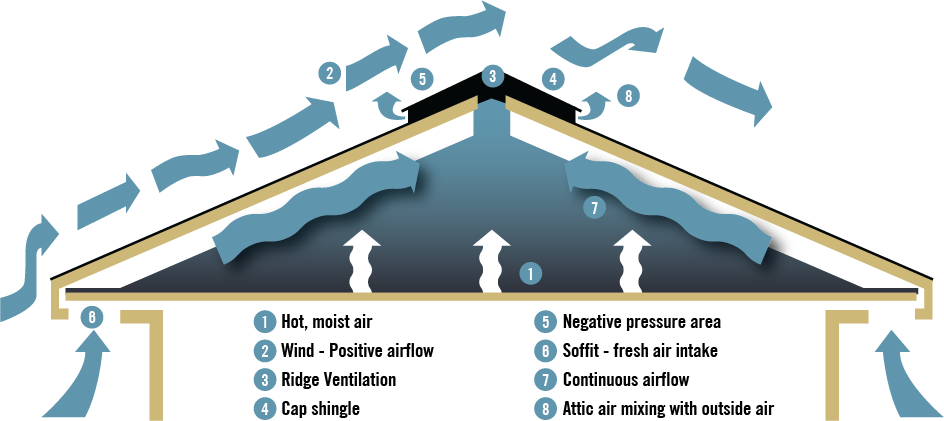
Oil and gas industry의 plant들에서 Partially enclosed building의 대표는 gas compressor building이다. 하부 wall이 뚫려있고 상부에 ridge vent가 있는 경우 등이 있다. 이런 경우 충분히 natural ventilation이 가능한지 검토하는 기준이 필요하다. 따라서 Ventilation 과 hazardous area classification standard를 참고하여 정리하겠다.
Guidelines for the determination of the level of ventilation of sheltered areas
To assess the type and level of ventilation for each type of area (open, sheltered, or enclosed)
- Enclosed areas: need an artificial ventilation system
- Open areas: deemed adequately ventilated (natural drafting exceeding 2 m/s)
- Sheltered areas (obstructed area): need to assess if adequately ventilated or not
Sheltered area가 adequately ventilated인지 아닌지 검토하기 위해서는 충분히 natural ventilation이 가능한지 확인하면 된다. 그 기준은 wall, floor, ceiling에 inlet/outlet opening이 적절한 위치와 사이즈로 위치한다면 natural ventilation이 가능하여 adequately ventilated라고 구분할 수 있다. 그렇지 않다면 ventilation system이 필요하다. Enclosed areas인데 내부에 HC source가 존재한다면 ventilation system이 반드시 필요하다.
하기는 API RP 505, BS 5925 및 oil and gas 업계의 top player 회사들의 standard에서 언급한 adequately ventilation 여부를 판단하는 기준을 근거로 작성한 구분 표이다.
Buildings where walls height is less than 2.5 m above ground, and the space under the roof is adequately ventilated
Buildings where the walls are provided with louvers or other types of slits purposely designed for ensuring that natural ventilation will be adequate. As a minimum the louvers should be present on three (out of the four) sides of the building: two strips of louvers, each with a minimum vertical width of 1 m, shall run along the full length of the wall, one at the top i.e. close to the roof/ceiling, the other at the bottom i.e. close to the floor/ground. It should also be checked that these buildings offer a sufficient free area of inlet openings as per the formula given in section 6.6.2.4.6 of API RP 505 [1].
Table 1. Guidelines for the determination of the level of ventilation of sheltered areas
| Walls (% surface) (2) | ||||
| > 0 to 25 | > 25 to 50 | > 50 to 75 | > 75 to 100 | |
| Top and bottom parts | Type of ventilation | |||
| Floor + ceiling | Adequate | Inadequate (3) | Inadequate | Inadequate |
| No floor (1) + ceiling | Adequate | Adequate | Inadequate | Inadequate |
| Floor, no ceiling | Adequate | Adequate | Adequate | Inadequate |
| No floor (1), no ceiling | Adequate | Adequate | Adequate | Adequate |
| Notes | |
| (1) Gratings are regarded as no floor | |
| (2) Plain walls (no louvers) | |
| (3) In some cases may be regarded as adequate. |
Compressor building의 경우 위의 표에서 " No floor + ceiling"에 해당되며 wall의 면적이 50%이하라면 Adequate ventilation으로 구분될 수 있다. Wall이 그 이상의 면적이라면 inadequate ventilation으로 간주될 수 있으므로 wall 면적으로 줄이는 방향으로 building design이 필요하다. 추가적으로 H2와 같은 Lighter HC compressor라면 building에 Ridge vent를 고려하여 fugitive emission과 같은 H2이 축적되는 것을 방지하도록 한다.
Table 2. Checklist for Adequate Ventilation.
| Achieving adequate ventilation is described below. (API RP 505) | Yes/No | Remark |
| Any method utilized is required to satisfy both (a) and (b) below, as applicable. | ||
| a) For flammable liquids with heavier-than-air vapors, ventilation shall be arranged to ventilate all areas (particularly floor areas) where flammable vapors might collect (see 7.2.2). | ||
| b) For lighter-than-air gases, roof or wall openings shall be arranged to ventilate all areas (particularly ceiling areas) where gases might collect. | ||
| Enclosed areas (rooms, buildings, or spaces) that are provided with at least six (6) air changes per hour can be considered as adequately ventilated. This ventilation rate can be accomplished by either natural or mechanical means. Loss of mechanical ventilation should be indicated by an alarm or other means to initiate corrective action. | ||
| Recirculation of inside air is an acceptable means of achieving adequate ventilation in enclosed areas if: | ||
| a) the recirculated air is monitored continuously with a gas detection system meeting the requirements of 6.8.2a through 6.8.2h, and |
||
| b) the gas detection system is designed to automatically modify recirculation, introduce additional dilution air, provide an alarm (audible or visual, or both, as most appropriate for the area), and provide exhaust (at a minimum rate as described in 6.6.2.4.2) to the outside if vapor-air mixtures in concentration over 20 % of their LFL are detected. |
||
| Dilution air shall be added to the space in question to ensure that the concentration of flammable gas or vapor is maintained below 25 % of the LFL for normal conditions |
||
| For naturally ventilated enclosed areas (e.g. buildings), air flow due to thermal forces (stack effect) provides adequate ventilation if the inlet and outlet ventilation openings are properly sized and located. When determining adequate ventilation for enclosed areas using the mathematical analysis below, a safety factor of two should be used, which increases the minimum calculated air flow rate required to 12 air changes per hour. The minimum area for inlet and outlet openings in buildings to obtain a complete change of air each five minutes (12 air changes per hour) can be calculated from Equation 1 and Equation 2 if there is no significant building internal resistance, and the inlet and outlet openings are vertically separated and on opposite walls. It is recommended that this method of calculating adequate ventilation be limited to enclosed areas (e.g. buildings) of approximately 30 m3 (1000 ft3) or less. |
||
| Buildings or other enclosed or partially enclosed areas are considered adequately ventilated because of their construction characteristics if they comply with both 6.6.2.4.1 and one of the following: |
||
| a) a building or area having a roof or ceiling with walls comprising 50 % or less vertical wall area than the total wall area possible is considered to be adequately ventilated (regardless of the type of floor); |
||
| b) a building or area is considered to be adequately ventilated provided it has neither a floor (for example, the floor is grating) nor a roof or ceiling; |
||
| c) a building or area is considered to be adequately ventilated provided it is without a roof or ceiling, and provided that there are no walls for a minimum of 25 % of its perimeter. |
||
| Enclosed areas can be considered as adequately ventilated if the ventilation rate provided is at least four times the ventilation rate required to dilute the anticipated fugitive emissions to below 25 % LFL, determined by detailed calculations as per Annex B. If the ventilation rate provided is less than three air changes per hour, it is recommended that continuous monitoring with fixed gas detectors be provided to assure that less than 25 % LFL is maintained. This ventilation rate can be accomplished by either natural or mechanical means. Loss of mechanical ventilation should be indicated by an alarm or other means to initiate corrective action. |
||
| Recirculation of inside air is permitted in accordance with 6.6.2.4.3. | ||
Table 2에서 언급한 조건에 해당되지 않는 곳은 Inadequate Ventilated Area 라고 정의한다.
Building의 일부는 Inadequate Ventilated Area 이고, 나머지 부분은 Adequate Ventilated Area일 수 있다. 예를 들어, compressor building의 아래 부분은 wall이 없어서 Adequate Ventilated Area 일 수 있다. 반면에 shed의 상부(ridge vent or the like가 없는 경우) 는 Inadequate Ventilated Area 일 수 있다. 그러므로 Ligher HC이 존재할 수 있는 경우에 상부에 vent를 설치하면 전체 buidling을 Adequate Ventilated Area로 구분할 수 있다.
References
- API RP 505 (2018)
- NPFA 497
- IEC 60079-10-1
- BS 5925 Code of practice for ventilation principles and designing for natural ventilation
** Example of FAR (Field Auxiliary Room)
- Plant rooms: Contain equipment for utilities like HVAC, electrical, and plumbing.
- Cleaning rooms: Provide storage and work space for cleaning supplies.
- ICT rooms: House servers, network equipment, and other technology infrastructure.
- Building services rooms: Contain mechanical, electrical, and plumbing equipment.
- Storage rooms: Provide storage for various items.
- Circulation spaces: Halls, corridors, and stairwells connecting different parts of the building.
'내일 공부' 카테고리의 다른 글
| HAC- ignition probability (0) | 2025.05.28 |
|---|---|
| Layered Gas Detection System (0) | 2025.05.28 |
| Compressor shelter내의 HC 누출로 인한 화재/폭발 예방 방안 (2): Ventilation (0) | 2025.05.24 |
| Column skirt에 내부에도 내화 (fireproofing)를 적용하는 것이 적절한가? (0) | 2025.05.23 |
| SIF의 SIL determination시 주의할 점 (0) | 2025.05.19 |


