
Philosophy with Integrity
Fire Protection Strategy: (1) Establishment 본문
궁극적으로 fire protection의 목적은 이미 발생한 small fire를 escalation 예방하는 것이다. 해당 fire zone에서 주변 fire zone으로 fire가 전파되는 것을 막기 위해 passive/active fire protection measure를 활용한다. 이 때, 최악의 case가 pressurized vessel/piping의 rupture이다. 이를 예방하기 위해 fire protection strategy를 수립할 필요가 있다.
Fire protection philosophy
Mitigation measures for equipment that can be exposed to a fire often include:
- equipment design,
- equipment layout,
- structural fireproofing,
- area-drainage design,
- firewater-system design,
- emergency response capabilities,
- emergency isolation,
- and/or emergency depressuring.
We should assess how effective the site-specific mitigation measures can be when establishing a fire protection strategy.
Background of Fire Protection Strategy
A typical fire protection measure is fireproofing. The main concerns relating to the use of fireproofing are:
- Increased corrosion of materials covered by fireproofing
- Reduced possibilities for inspection and maintenance of equipment covered with fireproofing
- Increased weight
- Increased need for space
- Increased need for maintenance of the fireproofing
- Increased cost
이 중 HC을 handling하는 pressurized vessel에서 가장 우려되는 점이 corrosion이다. 그래서 fire proofing을 최소화하는 방안으로 EDP를 고려할 수 있다. EDP를 적용함으로서 얻을 수 있는 장점은 fire에 fuel source 공급을 차단할 수 있고, fire heat에 노출된 system의 rupture를 예방해서 피해 크기의 escalation을 예방할 수 있다. 자세한 사항은 아래와 같다.
Leaking process segment:
- reduce the risk rate and leak duration from a leaking process segment (and, hence, also reduce the associated fire in case the leak is ignited)
- remove combustibles (gas/liquid) from the fire area by disposal to the flare system
Heat-exposed process segment:
- reduce the pressure in a process segment in the case of a fire exposing the segment in question. A reduction in pressure implies reduced material stress and, hence, reduced risk of rupture due to heating caused by the fire.
- reduce the pressure and inventory of the process segment to an acceptable level prior to rupture, if rupture can not be avoided.
EDP를 적용함으로서 발생가능한 additional risk 혹은 concerns 또한 존재한다. 이는 아래와 같으며, 이는 EDP를 적용하면서 적정성을 검토해야 한다.
- Brittle fracture by lowering the system temperature
- Hydrate or ice can lead to plugging the depressuring system caused by lowering temperature.
- Internal damage caused by higher speed depressuring
- Lowered thermal capacity can increase the vessel wall temperature to rupture.
EDP는 flare system과 같은 disposal system이 필요하다. 그렇지 못한 경우는 차선책으로 fireproofing 대신 fixed water sprary를 사용할 수 있다.
Fire Protection Strategy
- Fire protection을 위해서 structure/suppot는 fireproofing을 적용한다.
- Pressurize vessel의 fire protection을 위해서는 fireproofing 대신 PSV와 EDP를 최대한 활용한다. fireproofing을 대체하는 만큼 manual이 아닌 automatic initiation of EDP를 적용한다. 이를 위해 reliable FGS (confirmed detection) 등을 구축한다. Fireproofing을 EDP로 대체하는 과정에서 protection measure로서 해당 effectiveness/reliability가 충분한지 확인이 필요하다.
- Fixed water spray system에 대한 기여는 특히 manual initiation은 EDP, PSV system design에 인정하지 않는다.
(1) Inherent
- Equipment Design against rupture caused by fires
- Facility layout
(2) Passive
- Structural fireproofing
- Area drainage system
(3) Active
- Emergency isolation
- Emergency depressurization
(4) Procedure
- Firewater system (automatic/manual)
- Emergency response capabilities
Methodology to maximize the utilization of the EDP instead of fireproofing
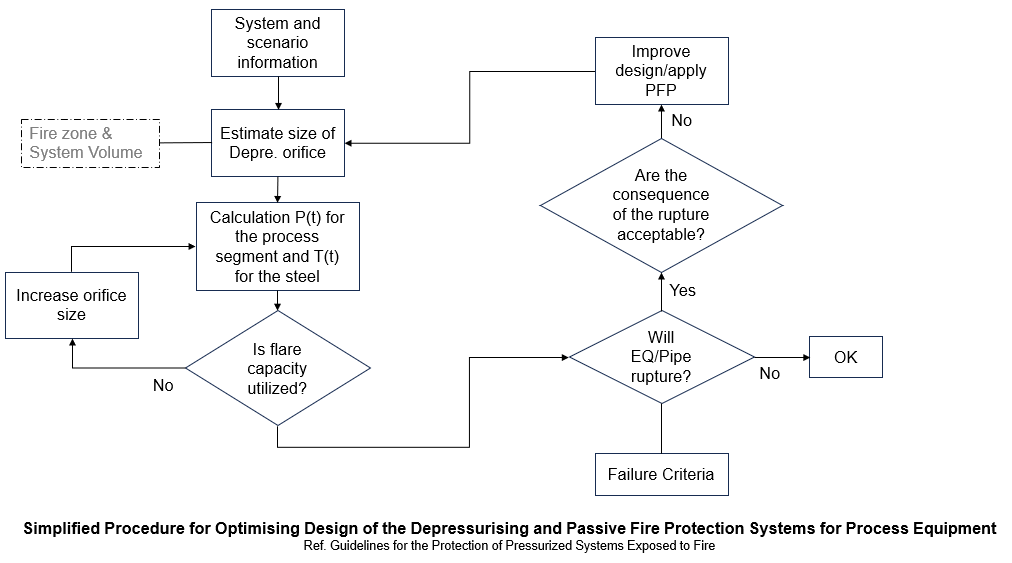
별도의 posting을 통해 자세한 과정과 그 과정에서 필요한 정보, 의사결정을 위한 기준, 그리고 PSE에 필요한 역량과 스킬 등을 서술할 예정이다.
References
- Guidelines for the Protection of Pressurized Systems Exposed to Fire, Scandpower
- API RP 521
'내일 공부' 카테고리의 다른 글
| Fire Heat Intensities (0) | 2025.06.14 |
|---|---|
| Fire Protection Strategy: (2) Where EDP can be applied. (1) | 2025.06.14 |
| Explosion 예방대책 (0) | 2025.06.14 |
| Target of design for Fire Protection (2) | 2025.06.09 |
| CCPS, Guidelines for Engineering Design for Process Safety 읽기 (0) | 2025.06.02 |
